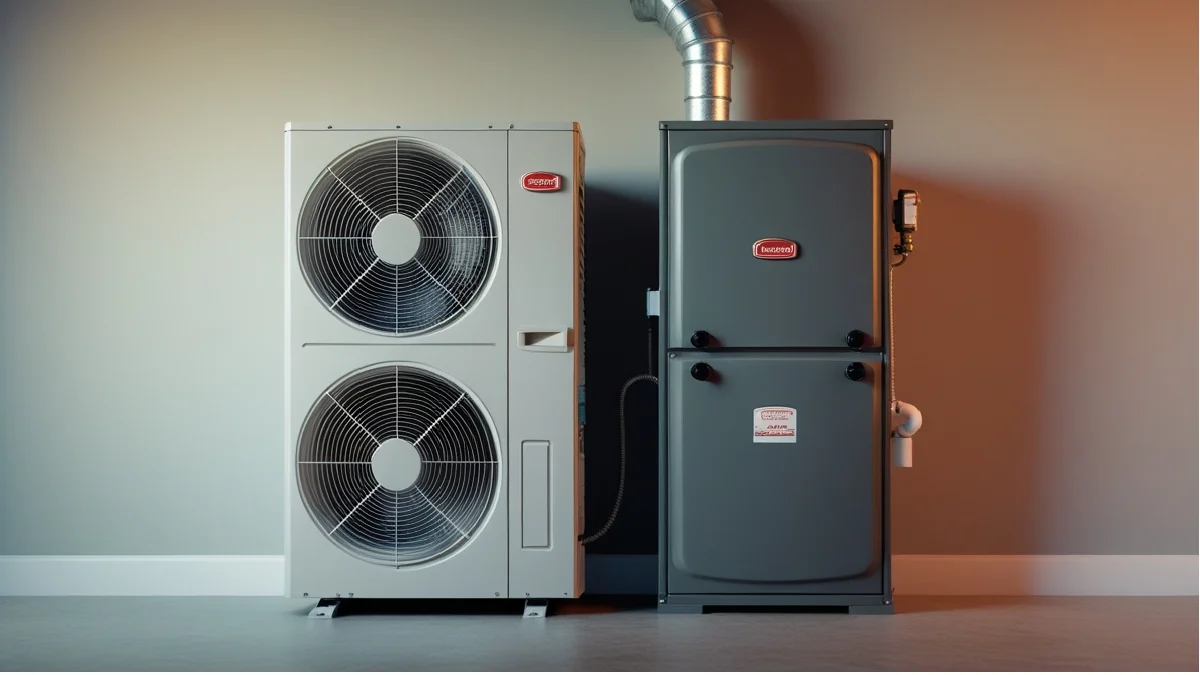
Electric Heat Pump vs Natural Gas Furnace: Which Is Better for Your Home in 2025?
Brrr! As winter approaches, your home’s heating system isn’t just about comfort—it’s about survival. In 2025, U.S. homeowners face a critical choice: electric heat pumps or natural gas furnaces? With volatile energy prices, aggressive climate goals, and game-changing tax credits, this decision has never been more complex.
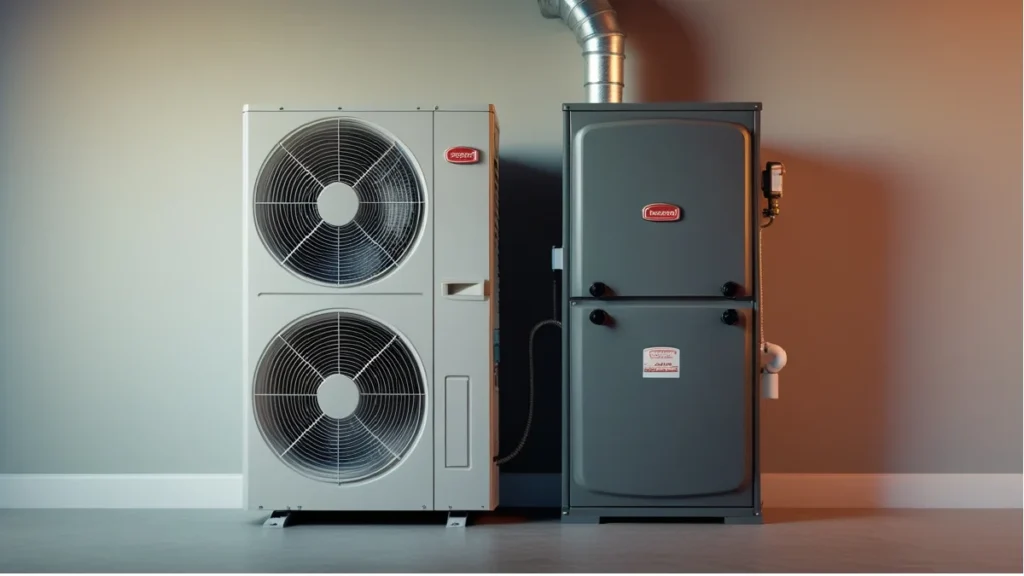
Modern heat pumps defy cold-weather myths, while furnaces promise brute-force reliability. We’ll dissect costs, efficiency, climate suitability, and even indoor air quality. Spoiler: There’s no one-size-fits-all answer, but by the end, you’ll know exactly which system deserves your investment.
What Is an Electric Heat Pump?
Think of a heat pump as a “thermal superhero.” Instead of creating heat (like a furnace), it transfers existing heat from one place to another using refrigerant. Here’s the kicker: It’s an all-in-one system. In summer, it reverses flow to act as an AC unit, pulling heat from inside your home and dumping it outdoors.
- How It Works:
A compressor circulates refrigerant between indoor and outdoor units. Even in 30°F weather, it “sucks” ambient heat from outside air (yes, cold air has latent heat!), amplifies it, and releases it indoors via ductwork or mini-split heads. - Efficiency Powerhouse:
Measured by COP (Coefficient of Performance). A COP of 3.0 means 300% efficiency—1 unit of electricity yields 3 units of heat. High-end models (like Mitsubishi Hyper-Heat) operate efficiently down to -15°F. - Ideal Climate:
Mild to moderate winters (e.g., Southeast, Pacific Northwest). But modern cold-climate heat pumps dominate in colder zones too—if sized correctly.
What Is a Natural Gas Furnace .Electric Heat Pump vs Natural Gas Furnace
The old-school workhorse. A gas furnace burns natural gas in a combustion chamber, heating a metal exchanger. Air blows across the exchanger, warms up, and circulates through ducts.
- The Burning Truth:
Efficiency is rated by AFUE (Annual Fuel Utilization Efficiency). A 95% AFUE unit converts 95% of gas into heat—wasting just 5% up the flue. Older models? 60–80% AFUE. Ouch. - Raw Power for Deep Freezes:
Unmatched in sub-zero temperatures. Furnaces deliver 120–140°F air instantly. No “defrost cycles” or efficiency drops. Perfect for Montana or Minnesota blizzards. - Home Compatibility:
Best for larger homes with existing ductwork. Requires gas line access and venting.
Energy Efficiency: The Numbers War Electric Heat Pump vs Natural Gas Furnace
Heat Pump COP vs Furnace AFUE:
While AFUE tops out near 98.5%, heat pumps typically offer 200–400% equivalent efficiency. Why? Electricity moves heat; gas creates it via combustion (with inherent energy loss).
| System | Efficiency Metric | Real-World Performance |
|---|---|---|
| Mid-Tier Heat Pump | COP 3.2 | 320% efficiency |
| High-Efficiency Furnace | AFUE 96% | 96% efficiency |
- Energy Savings:
In moderate climates (e.g., North Carolina), heat pumps use 30–60% less energy than gas furnaces. But in extreme cold, gas pulls ahead due to a heat pump’s COP drop and reliance on backup electric strips.
Cost Comparison: Your Wallet’s Verdict
Installation Costs:
- Heat Pump: 4,000–4,000–10,000 (ductless mini-split) or 6,000–6,000–18,000 (central system with ductwork).
- Gas Furnace: 3,500–3,500–7,500 + gas line/venting (1,000–1,000–5,000 if unavailable).
Monthly Operating Costs (Based on 2025 U.S. avg. prices):
| System | Avg. Monthly Cost (2,000 sq ft home) |
|---|---|
| Heat Pump (COP 3.0) | 80–80–120 |
| Gas Furnace (96% AFUE) | 90–90–150 |
Note: Highly dependent on local utility rates. Gas is cheaper per BTU, but heat pumps offset this with efficiency.
Maintenance & Lifespan:
- Heat Pump: Annual tune-up (100–100–150). Lasts 12–15 years.
- Furnace: Annual inspection (80–80–120). Lasts 15–20 years.
Environmental Impact: Beyond Your Thermostat Electric Heat Pump vs Natural Gas Furnace
- Carbon Emissions:
Gas furnaces emit CO₂ at your home (40–60 lbs per MMBTU). Heat pumps rely on grid electricity. In coal-heavy states (e.g., West Virginia), emissions may be comparable. But in renewables-friendly regions (California, New York), heat pumps cut emissions by 50–70%. - Solar Synergy:
Electric Heat Pump vs Natural Gas Furnace Pair a heat pump with rooftop solar for near-zero emissions. Battery backups keep it running during outages. - 2025 Incentives:
Federal tax credits cover 30% of heat pump costs (up to 2,000/yr)viatheInflationReductionAct(IRA).Manystatesaddrebates(e.g.,MassSave:2,000/yr)viatheInflationReductionAct(IRA).Manystatesaddrebates(e.g.,MassSave:10,000+).
Climate Performance: Frostbite vs Humidity
- Heat Pumps in Cold Climates:
Electric Heat Pump vs Natural Gas Furnace Modern units (e.g., Daikin Aurora, LG Red) work at -15°F but lose efficiency below 20°F. In Maine or Minnesota, a dual-fuel hybrid (heat pump + furnace) is ideal. The heat pump handles moderate cold; gas takes over in deep freezes. - Furnaces: King of the Tundra:
Zero performance drop at -30°F. But in humid summers, you’ll still need separate AC—unlike a heat pump’s 2-in-1 magic. - Regional Winners:
- South/Southwest: Heat pump
- Northeast/Midwest: Hybrid or furnace
- Pacific Coast: Heat pump
Comfort & Air Quality: The Silent Factors
- Heat Pumps:
Gentle, consistent airflow. Less “blast furnace” effect. Advanced models modulate output (±0.5°F accuracy). Built-in dehumidifiers improve summer comfort. - Furnaces:
Faster reheats after setbacks. But uneven temperatures (hot near vents) and dry winter air are common gripes. - Air Quality Edge:
Heat pumps win. No combustion = no nitrogen dioxide (NO₂) or carbon monoxide risks. Add a MERV 13 filter for allergen control.
Which System Is Better for YOU?
Match your home’s profile:
| Factor | Choose Heat Pump If… | Choose Furnace If… |
|---|---|---|
| Region | Mild winters (NC, CA, WA) | Extreme cold (MN, ND, MI) |
| Existing Systems | Ducts + electric resistance | Ducts + gas line |
| Upfront Budget | $7K+ available | <$5K available |
| Eco Goals | Net-zero aspirations | Minimal retrofits |
| Electricity Source | Solar/wind-heavy grid | Gas cheaper than electric |
Pro Tip: Get a Manual J Load Calculation (250–250–500). An undersized heat pump in Chicago will cost more than a furnace.
Conclusion: 2025’s Heating Crossroads
Choose a heat pump if: You prioritize efficiency, live below the Mason-Dixon, own solar, or qualify for IRA credits.
Choose a gas furnace if: You face Arctic winters, lack ductwork for retrofits, or gas prices are dirt-cheap locally.
Hybrid systems split the difference beautifully. But one truth unites both: Seal your ducts and insulate first. A 500insulationjobbeatsa500insulationjobbeatsa10,000 system upgrade.
🛎️ Final Call: Request quotes from 3 HVAC pros. Ask about “cold-climate” heat pump specs, hybrid options, and IRA paperwork assistance. Your perfect system awaits.
🔥 BONUS: FAQ (Steal These Google Rankings)
Q: Is a heat pump cheaper to run than a gas furnace?
A: Usually yes—except where electricity costs >$.30/kWh or temperatures stay below 20°F for weeks.
Q: How long do heat pumps and gas furnaces last?
A: Furnaces (15–20 years) outlive heat pumps (12–15 years). Maintenance is critical for both.
Q: Can a heat pump replace a gas furnace completely?
A: In mild climates, absolutely. In harsh zones, opt for a hybrid system to avoid costly backup heat.
Q: Which is better for the environment?
A: Heat pumps (paired with clean energy). Even on average U.S. grids, they cut emissions by 20–60% vs gas furnaces.
Q: Do heat pumps work in old homes?
A: Yes! Ductless mini-splits avoid ductwork hassles. Victorian or Craftsman? No problem.
“If your amana furnace not turning on despite thermostat settings, first check circuit breakers and air filters—but persistent issues may signal failing components (like ignitors or flame sensors) or warrant upgrading to a modern high-efficiency system. facebook “
Leave a Reply to Best Smoke Detectors with Battery 2025 – Top 5 Picks Cancel reply